
A Chance Encounter
The Case: High-Suspicion Pediatric Trauma
Presentation: A 14-year-old female presents with severe abdominal pain following a high-speed motor vehicle collision. The patient was a restrained rear-seat passenger, asleep at the time of impact, when her vehicle rear-ended another car. Front airbags deployed, though no other passengers sustained serious injuries. EMS arrived with the patient in a fetal position, clutching her abdomen and reporting 10/10 pain.
Initial Assessment: Upon arrival, the patient was lying on her side on the EMS stretcher, visibly distressed. My primary survey (A, B, C, D, and E) was largely reassuring: the airway was patent, breath sounds were clear bilaterally without evidence of chest wall trauma, and mentation was appropriate. Vital signs were notable for tachycardia, though the blood pressure remained stable (slightly hypertensive).
Clinical Course: Despite the lack of abdominal bruising or hypotension, my clinical suspicion for a catastrophic intra-abdominal injury remained high based on the mechanism and the patient's level of distress.
Imaging was complicated by the patient’s inability to tolerate a supine position due to exquisite pain. After aggressive titration of analgesics, she was eventually able to lie flat long enough for a bedside FAST exam. The initial scan was negative for free fluid, but given the high-risk mechanism, the workup continued. The patient remained stable enough for CT imaging, but I was puzzled as to the cause of the patient’s distress.
At this point, my colleague, Dr. G. suggested the possibility of a Chance fracture.
"Of course!" I said, but I was thinking, "What!?" 🤔 as I had never heard this diagnosis before.
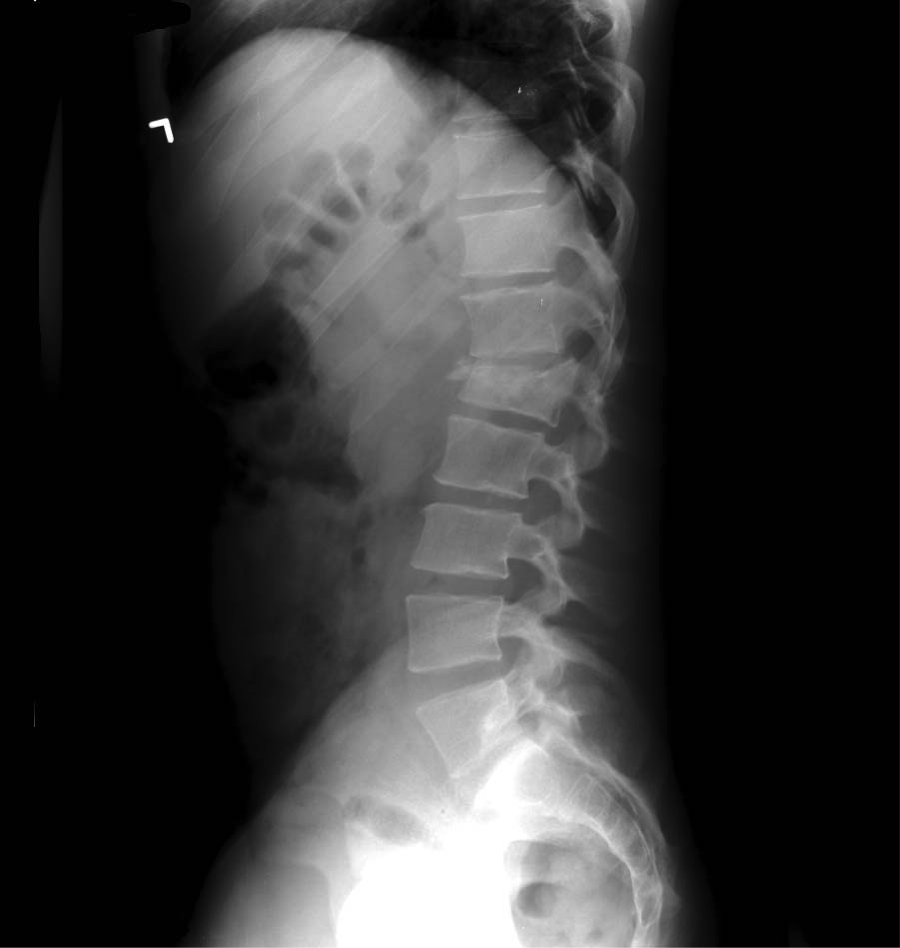
Excellent image and description from https://kchemimage.wordpress.com/answers-for-may-clinical-radiograph/
The Lesson: The "Chance" You Can’t Afford to Miss
First described by G.Q. Chance in 1948—predating the modern three-point seatbelt—this injury is a classic "hidden" trap. I quickly learned I wasn't alone in my initial oversight; studies suggest that a majority of pediatric Chance fractures are initially misdiagnosed.
This is a high-stakes miss: these fractures carry a 40% risk of associated intra-abdominal injury, particularly to retroperitoneal organs. Because retroperitoneal hemorrhage often does not result in free intraperitoneal fluid, a FAST exam is frequently, and dangerously, falsely reassuring.
Clinical & Legal Implications
A Chance fracture is an unstable, flexion-distraction injury of the vertebral column. Pediatric Chance fractures typically present in children around 9-10 years of age following motor vehicle accidents involving lap belt restraints, with the most common injury level at L2-L3 and a high incidence of concomitant intra-abdominal injuries.
Unfortunately, misdiagnosis is common in the pediatric population, with one study of 26 patients showing the majority were missed initially.
Key pitfalls for the clinician:
Absence of the "Seatbelt Sign": Like this patient, many children lack abdominal ecchymosis on presentation.
Neurologically Intact: Despite being an unstable spinal column injury, most pediatric patients do not present with neurological deficits, such as lower extremity paralysis.
Intra-abdominal injuries: Pediatric patients have significantly higher rates of intra-abdominal injuries, with hollow viscus injuries more common than solid organ injuries.
CT Subtlety: These injuries can be subtle on axial CT slices if you aren't looking for the horizontal fracture line through the vertebral body and posterior elements.
Remember: A FAST exam is a screening tool for intraperitoneal blood; it is not a rule-out for all dangerous intra-abdominal or spinal pathology.
The Outcome: CT imaging confirmed an L1 Chance fracture. Fortunately, there were no associated solid organ lacerations or retroperitoneal injuries. The patient remained stable and was transferred to a tertiary pediatric trauma center for definitive stabilization.
Expert's Edge: Medicine as a Team Sport
No provider is an island. This case was a humble reminder that the "Expert’s Edge" often comes from the collective wisdom of the room.
Own Your Limitations: Even with ATLS training, primary and secondary surveys are designed to catch immediate life threats, not to exclude every nuanced injury.
Acknowledge the Team: Thanks to an astute colleague, I was able to expand my differential and order the definitive imaging required for a safe transfer.
Listen to the Patient: If the patient's pain level is "out of proportion" to your screening tests (like a negative FAST), trust the patient over the test.
Maintain a high index of suspicion, ask for help when the clinical picture doesn't add up, and never let a "negative" screening test override your clinical gut.
Stay sharp to keep your edge,
Adam
Resources:
Arkader, A., Warner, W. C., Jr, Tolo, V. T., Sponseller, P. D., & Skaggs, D. L. (2011). Pediatric Chance fractures: a multicenter perspective. Journal of pediatric orthopedics, 31(7), 741–744. https://doi.org/10.1097/BPO.0b013e31822f1b0b
Hazen, B. J., Keane, O. A., Vandewalle, R. J., Grady, Z., Wetzel, M., Chern, J. J., & Santore, M. T. (2023). Difference in Presentation and Concomitant Intra-Abdominal Injury with Chance Fracture in Pediatric and Adult Populations. The American surgeon, 89(6), 2486–2491. https://doi.org/10.1177/00031348221102607
Voss, L., Cole, P. A., & D'Amato, C. (1996). Pediatric chance fractures from lapbelts: unique case report of three in one accident. Journal of orthopaedic trauma, 10(6), 421–428. https://doi.org/10.1097/00005131-199608000-00010
Andras, L. M., Skaggs, K. F., Badkoobehi, H., Choi, P. D., & Skaggs, D. L. (2019). Chance Fractures in the Pediatric Population Are Often Misdiagnosed. Journal of pediatric orthopedics, 39(5), 222–225. https://doi.org/10.1097/BPO.0000000000000925
